

Create the source text first
Turn maintained product attributes into a draft for review.
AI in OMN PIM
Translate existing product copy in OMN PIM and keep language versions connected to the product.
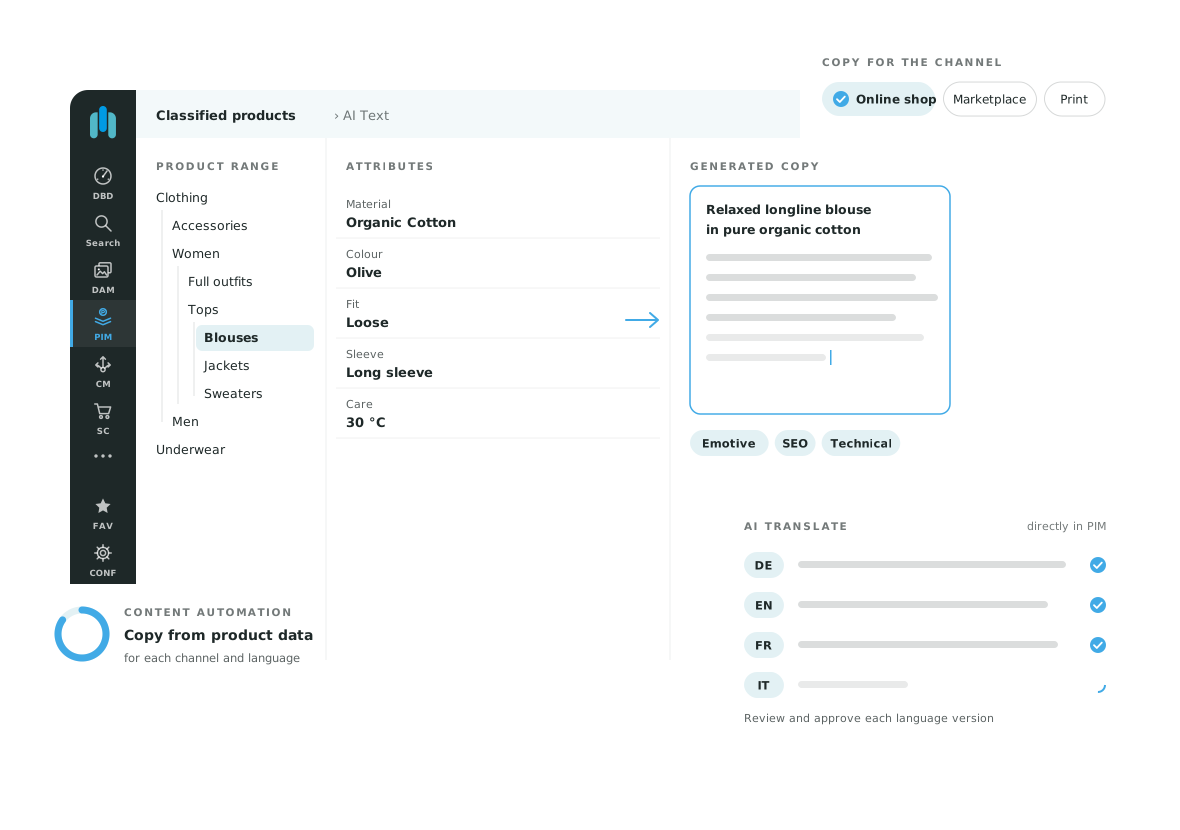
AI Translate translates existing product information. Text remains in its PIM context, reducing the need to copy language versions between separate translation tools and product records.
Use an approved source text for additional languages. Define target language, terminology and review responsibilities.
Plan what happens when the source text changes and which language versions need another review.
Translating copy and localising for a market are different tasks. Also review local terminology, units, required information and suitability for the publishing channel.
An integration with an existing translation memory system can be assessed during the project. Scope and workflow depend on your systems.
DAM offers AI document translation with DeepL, for example for PDF, DOCX and PPTX files. This is a different workflow from translating individual product texts in PIM.
Use AI Text to create a source text from product attributes. AI Translate starts with existing copy.
Tell us about your use case. We will show you the relevant OMN feature and discuss requirements, services and scope.
Request a demo